
Celebrating 20 Years of Care | Learn More

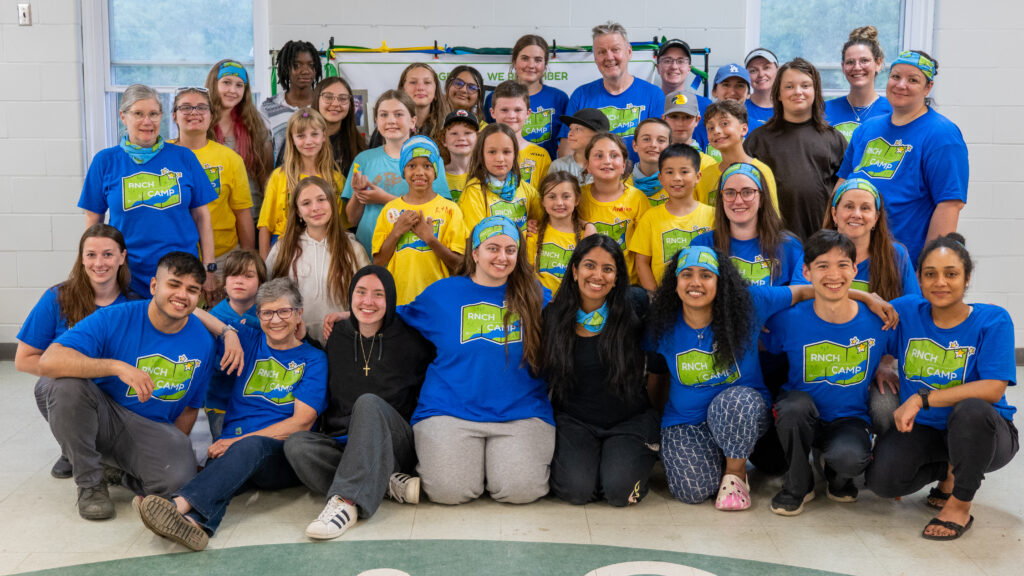
Grief can be an overwhelming and deeply personal experience — especially for children. That’s why Roger Neilson Children’s Hospice (RNCH) launched its first-ever sleepaway camp for Young Grievers one weekend in June. The camp offered a safe, welcoming space, alongside a team of staff members and volunteers, where young people could come together to openly share memories of the people in their lives who have died and learn how to navigate their emotions, big and small.
“The stars aligned,” said Stephanie Poirier, Manager of Quality and Patient Safety, describing the collaborative effort behind the camp’s creation. Built from the ground up, the idea of offering the camp emerged as RNCH expanded its grief services to encompass all grieving children and youth who have had someone significant to them die, not just those who had a sibling die.
This expanded mandate created the perfect opportunity to engage with the Kemp Care Network in Hamilton, a team RNCH had previously supported in their pediatric hospice planning. Kemp Care Network runs Camp Keaton, a grief camp that served as a model for this new initiative. With their proven framework, and support from Christie Lake Kids who offered the essential space, blended with traditional camp activities and expertise, the initiative was later turned into a reality.
What made this camp so unique was being the first grief camp in the Eastern Ontario region dedicated to children and youth. “At camp, you’re surrounded by people who have also experienced the death of someone close to them,” Stephanie explains. “For a lot of kids, grief can be confusing and isolating.” Being among a group of other campers who had a similar experience helped reduce the sense of being alone.
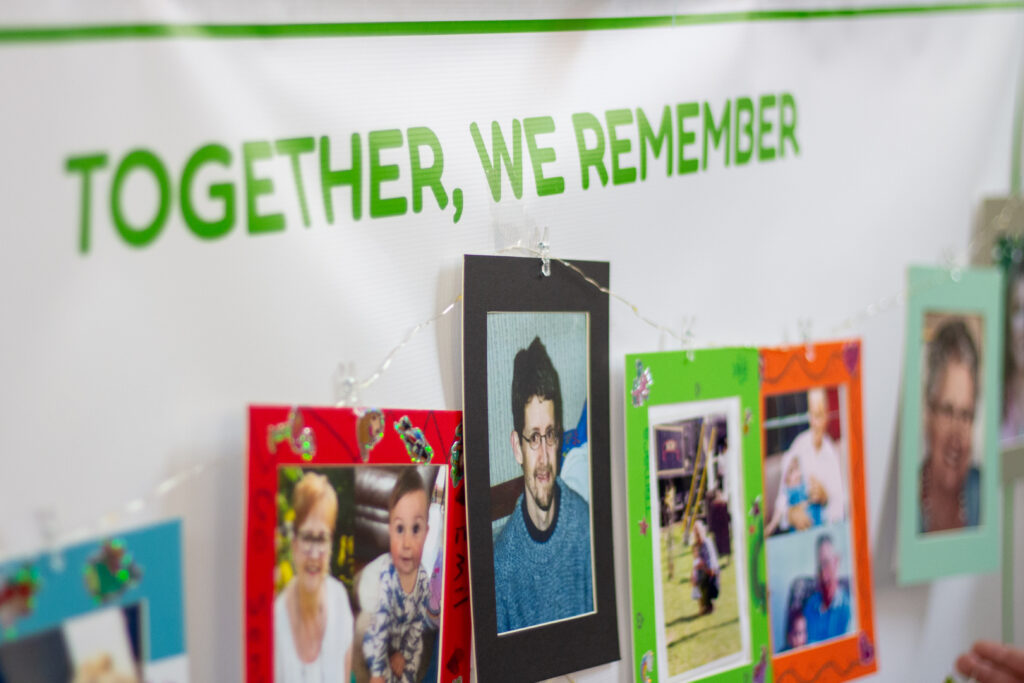
The camp thoughtfully balanced a weekend of fun activities with meaningful opportunities to navigate grief. One of the first grief-related activities was a photo ceremony, where each camper was invited to share a picture of their person, talk about their death, present them and offer a cherished memory or fun fact. These photos were then placed on a memory wall, which was later moved to the dining hall so their loved ones could be present throughout the weekend.
When asked what lesson they would take away from camp, one camper told us: “It’s good to talk to people instead of suffering in silence.” – Anonymous Camper
Each camper’s grief journey was honoured by creating a self-portrait and a personalized coping toolkit featuring affirmation cards, breathing techniques, and other items chosen by the campers. Classic summer camp activities included canoeing, swimming, and making s’mores, reminding everyone that grief and happiness can coexist. “Even amid strong emotions, there’s still plenty of fun to be had,” said Stephanie.
“One of the biggest things I learned? Grief doesn’t look the same for everyone. Some campers felt better after a quiet moment alone. Others needed basketball or painting. A deep talk helped one; a silly game helped another. It reminded me that healing has many faces.” – Dhiyva Balaji, Rec Therapy Student & Cabin Buddy.
Some of the most powerful moments came during the luminary ceremony, where kids wrote messages to their person on handmade paper lanterns. “It was amazing to see how much time they invested in making these beautiful lanterns,” Stephanie said. They were then lit up and lined around the campfire stage; a glowing reminder of the light their person brought into their lives.
The camp activities were designed to create a safe and supportive environment for young grievers aged 7 to 17 years old. Stephanie noted that kids may sometimes hesitate to talk about their feelings at home, fearing it will upset or burden their already grieving family members. “At camp, they knew this was a space to bring up these hard feelings,” she says. While kids had the opportunity to work through these feelings together, one-on-one support with a dedicated team of professionals was available as needed to help guide them through more intense moments of grief. Activities like the photo ceremony naturally opened space for those conversations, without ever forcing it.
For Stephanie, the experience was unforgettable. “I’ve been in my career for 26 years, and this was the most magical thing I’ve ever been part of,” she said. “You plan it for months, and then you get to see it; to see these kids come out of their shell, open up, and still just have so much fun.”
The success of this camp was due to the incredible community that came together to make it possible. Thank you to Christie Lake Kids for providing the essential space and expertise that helped bring this camp to fruition, alongside Camp Keaton’s incredible framework. We are also deeply grateful to RNCH’s staff and volunteers who delivered compassionate care and thoughtful programming throughout the camp weekend. And lastly, thanks to the incredible community partners who added meaningful touches to elevate the experience: